Definition
A local runner API key is a long-lived credential the CLI can use for non-interactive authentication.
What it is for
It is intended for scripts and CI where a person cannot enter a device code.
How it works
- Pass the key with
rima login --api-key; the CLI saves it to its config and authenticates with it from then on. - In CI, store the key in the pipeline’s secret store and inject it into the login step before running tests.
Example
Store the key in a CI secret and pass it to the Rima CLI before running the release smoke group.
Common use cases
- CI pipelines.
- Scheduled local automation.
- Headless build servers.
- Non-interactive scripts.
Where to find it
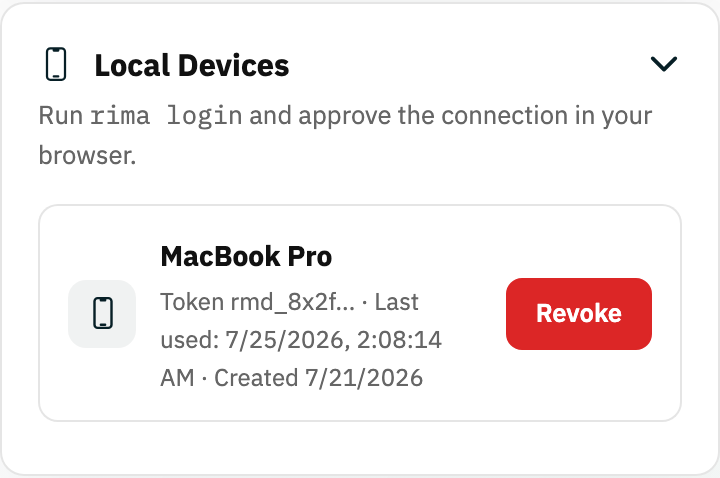
Generate or copy the runner key from the dashboard’s local-runner controls, then keep it in a secure secret store.
Limitations, requirements, and permissions
- Long-lived: anyone holding the key can act as your runner, so keep it in a secret store and rotate it if exposed.
- The interactive device-code flow is the recommended path for personal machines.
Related features and guides
Ready to try it yourself?
Create your free account, record your first flow, add a validation, and let Rima run it on a schedule for you.
Start free trial